A Mind-Bending Idea for Clinical Trials
What if bridging the time gap between site identification and the first patient in wasn’t about facilitating sponsor-site engagement and negotiations—but about getting rid of it completely?
What if the decision was unilateral?
What if, via new regulations, clinical research activities were imposed directly on sites selected by sponsors?
That’s a future in which governments treat medical progress as a matter of national security. Healthy citizens are productive citizens. In this scenario, every healthcare facility would be equipped to run clinical research, with pricing set in advance.
Sites would receive a notification:
“Good morning, Dr. XYZ. You have been selected for participation in the following trial [Protocol Name] by [Sponsor Name]. The trial will be initiated at your site on [DDMMYYYY]. Please find the protocol attached. Proceed with preparation.”
Or what if bridging the gap meant removing control from both sponsors and sites?
A WHO.AI—or any neutral entity—could allocate trials based on patient access, feasibility, and competitiveness. Sponsors would adjust parameter weights to influence the algorithm’s behavior - respecting individualistic behaviour - but not select sites directly.
No admin. No negotiation. No bottlenecks.
Or what if we removed Phase II and III altogether?
Double down on preclinical rigor. Give humans the right to try. Let real-world evidence surface the best-performing drugs—faster.
These are bold, planned futures. But what if the path to a better future isn’t a plan at all? What if, in our attempts to create a better future, we build stepping stones toward it—but we cannot know what future those stones will lead to?
In each of these futures, Yendou is unnecessary.
Or maybe it’s critical to unlocking them.
Or maybe it’s building toward something we can’t predict.
Something we can’t plan for.
The Mind-Bending Discovery
I’ve been reading Why Greatness Cannot Be Planned by Kenneth O. Stanley and Joel Lehman, two pioneering AI researchers formerly at OpenAI and Uber AI Labs, renowned for their groundbreaking contributions to evolutionary algorithms, neuroevolution, and open-ended innovation. And, honestly, this book is blowing my mind.
The central theory is this: if you have an ambitious goal, your objectives—the steps you believe are required—can actually deceive you and get in the way.
You might think, “Wait, what?” But it makes sense. If your goal is straightforward, having a plan works. But the more ambitious the goal, the more likely your careful, objective-driven plan is to fail.
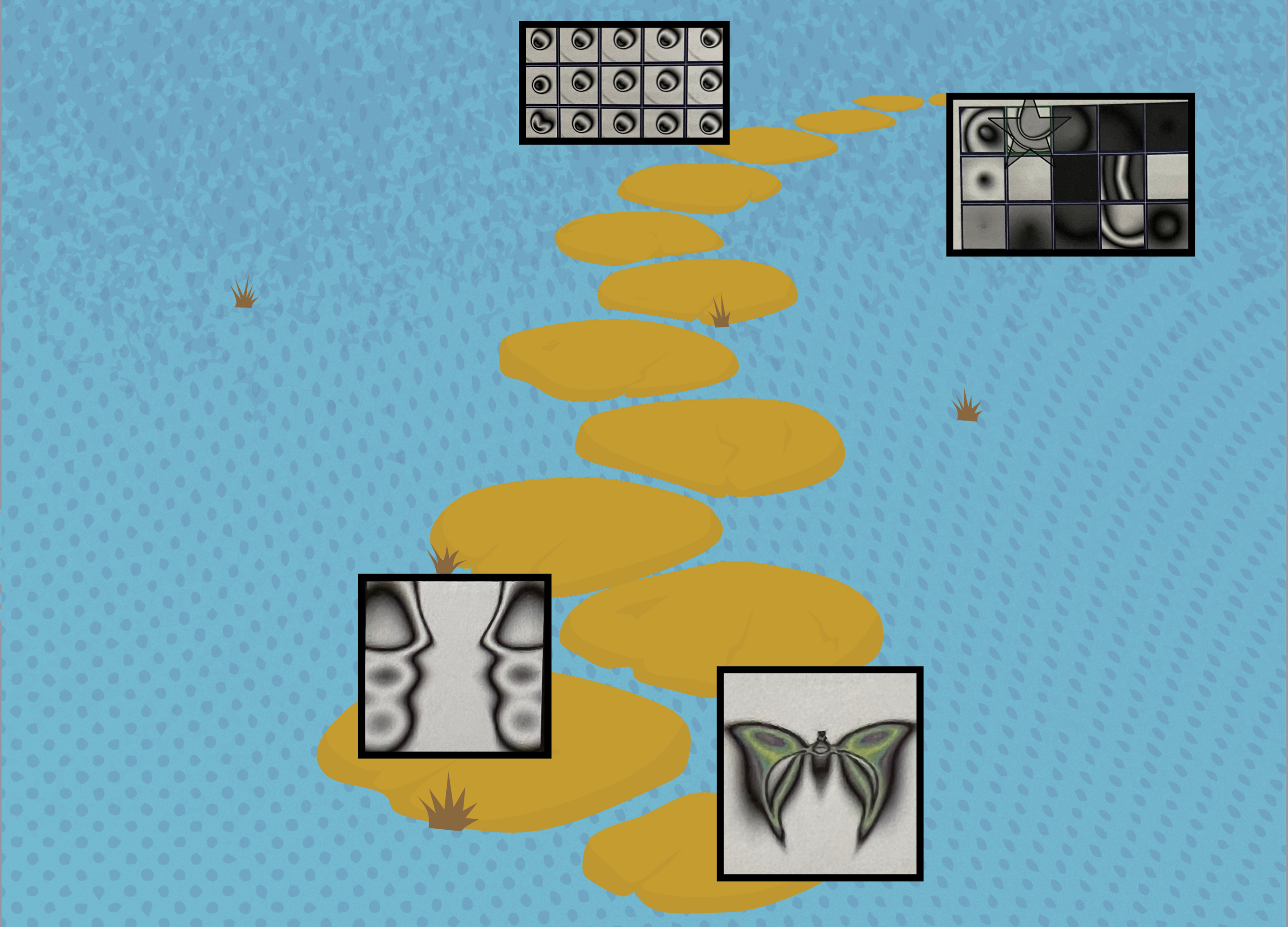
They stumbled on this idea through a project called Picbreeder. It’s like animal breeding—but for pictures. You pick an image, and it generates four random mutations. You pick the most interesting one again. And again. No goal—just curiosity.
Then something wild happened. The system started generating remarkable images: a detailed butterfly, a sleek race car. When they traced the path backward, it made no sense. A race car had emerged from a stepping stone that looked like… an alien face.
To find a Car, one shouldn't look for a Car. Source: PicBreeder
You couldn’t reverse-engineer the process.
Before this, machine learning was obsessed with objectives—set a goal, train the algorithm to win, like AlphaGo beating humans at chess. But now, they were seeing something else: better results when the machine was set free.
If a user had started with the objective of making a fast car, they would never have chosen the alien face. They would’ve hunted for images that already looked like cars—and missed the real path entirely. Because their objective was a false compass.
The alien face was the correct stepping stone.

To find a Car, one shouldn't look for a Car. Source: PicBreeder
How Big a Deal Is That?
The book makes it clear: the core problem with discovery is that we don’t know the stepping stones that lead to where we want to go.
Breakthroughs often rely on breakthroughs in unrelated fields.
We needed the vacuum tube to manage electricity before computers were even conceivable.
But if you gave a team of scientists 5,000 years to invent a computer, they would never have started by inventing a plastic vacuum tube. The path wasn't about building a better computer, but about creating an entirely new enabling technology. It was a stepping stone, not a planned step.
Another example: evolution. Evolution never set out to create intelligent life. If you handed someone a petri dish filled with single cells and asked them to create a super-intelligent human, they would never pick a flatworm as a stepping stone.
But the flatworm was essential. It enabled bilateral symmetry—a foundational leap in biological design. Who would have guessed that?
That’s the point.
The bigger the ambition, the harder it is to predict the stepping stones.
You have to be willing to accept that the alien face leads to the car.
That the flatworm leads to the human.
Evolution didn’t try to produce human-level intelligence. And that’s exactly why it did.
Let me repeat this:
“Evolution on Earth wasn’t trying to evolve human intelligence. And that’s the only reason it did. Because it wasn’t the objective.”
Sit with that sentence for a moment. Feel its weight and lightness.
The authors argue that trying to define a perfect roadmap for ambitious goals is not just misguided—it’s delusional.
You can’t see the sequence ahead. You’ll likely only ever see the next stone.
They compare it to crossing a foggy river. You know you want to reach the other side, but the fog is so thick you can only see the next rock. Step on it, and then you can see the one after that. The only way to move forward is to move forward.
The Picbreeder algorithm? It’s a stepping-stone collector.
Just like evolution.
The path to great goals isn’t linear. It’s a sequence of unpredictable stones—each unlocking the next.
What Does a Stepping Stone Look Like?
To find a Butterfly, one shouldn't look for a Butterfly. Source: PicBreeder
In nature, every stepping stone is an organism that is well-adapted in its own right. That’s what makes it powerful. Each is a success in itself—not merely a bridge to the next.
And every one opens up a new landscape.
This completely dismantles the myth that you can plan your way to success.
Reading the book made me think of two things.
Objectives as a Parenting Hell
As parents, we want our kids to thrive. We don’t want them to struggle. So we start crafting pathways: Read this. Learn that. Build resilience. Become someone strong and kind.
We obsess.
Then one day, my daughter refuses to read. She wants to listen to an audiobook instead. And I panic.
“If she doesn’t want to read, will she stop being curious? Will she struggle with attention span? What if this ruins everything? Am I failing this project of raising the future generation of leaders?”
I spiral.
I forget that we don’t know the stepping stones. I could never have predicted that she’d get into athletics, join a national team, train five days a week—and that this would become her resilience engine. Not Dostoyevsky at age 10.
We set objectives because we think it’s the only way forward.
But we don’t know the stepping stones.
We try to control instead of being in the moment. Instead of letting each stone be valuable in its own right. This realization floored me. I don’t do that. And it’s crazy.
How Much of Yendou Was Planned?
Almost nothing.
Our north star was always clear: shorten the white space in drug development. Our objective was to build a platform for pharma companies.
That was the plan. But the path we actually took?
We didn’t plan to pivot to CROs.
We didn’t plan to build a site engagement platform.
We didn’t plan for a site-centric data infrastructure.
But it turned out to be essential. That infrastructure enabled us to build engagement intelligence—which became our most valuable feature.
It wasn’t planned! We were just naive and courageous enough to follow an interesting path no other platform had tested. It just turned out to be genius.
The marketplace we built early on? It failed. But it gave us insights. And those led to new stones. That stepping stone was never one of my objectives, but it was created based on all the iterations and actions that were happening.
I remember saying to the team: “This month proves there’s no such thing as free will.”
None of it was predictable.
And that’s what makes it beautiful.
The Flatworm’s Grand Plan (That Wasn’t a Plan)
Evolution wasn’t chasing intelligence.
Each organism was just surviving and reproducing—well-adapted to its context. That was enough. And in doing so, the system evolved intelligence.
Eventually.
By accident.
That’s us.
We think we want happiness. Meaning. Fulfillment. But underneath it all, we’re just trying to survive and reproduce.
Reproduce ideas. Art. Children. Products. Code. Systems. Anything that others can build upon.
All greatness is built on generations who simply survived and created. Evolution never stops. We’re just its current shape.
Testing the Theory: The Robot Who Fell Down
To test their theory, the authors built two types of algorithms for a robot learning to walk.
One was objective-driven: The goal was simply "walk to the door." walking = good. falling = bad. When failed → restart.
The other had no goal, just the drive to do something new each time. walking = good. falling = good. everything is good as long as it didn’t happen before.
This robot crashed, flailed, kicked, and spun wildly.
And accidentally, it discovered walking.
Why? Because falling and kicking its legs was an important achievement. Turns out, Kicking legs led to oscillation—the foundational motion of walking. Falling wasn't failure; it was progress, unlocking new behaviors.
If walking had been the strict objective, falling would’ve been punished, and the path to success blocked.
The same principle applies to kids. Crawling seems unrelated to walking, but it builds the muscles needed to stand against gravity. Objectively, why waste time crawling when you could practice walking? Yet discouraging crawling would derail the process.
Or consider speech: Listening feels passive, a different skill entirely. But it’s foundational to speech learning. From a "rational" standpoint, we'd train speech through speaking alone, missing the essential stepping stone.
In both cases, exploration leads to new skills that themselves create new skills in different categories. The objective wasn’t to walk or to speak. But following the urge to explore led us here.
“It is only when the objective is ignored, that the reins of exploration swing free, and the farthest frontiers are conquered.” - Kenneth O. Stanley & Joel Lehman
Planning for Greatness Without Planning in Clinical Trials
So how do we apply this? How can we plan for greatness in clinical trials without actually planning?
Embrace novelty-seeking. Let exploration drive the process. Just as the book suggests.
One parallel stands out.
What if we applied the concept of Picbreeder to feasibility and contract negotiations? What if protocol design wasn’t just the work of scientific teams at sponsors or CROs?
Make it iterative. Based on investigator and site feedback.
Start with a basic protocol "image." Generate variations. Let sites select the most interesting ones. Mutate through real-world input.
How much better a protocol could we create? One that’s theoretically sound. Practically feasible. Patient-centric from the start.
Now, contract negotiations. In a poll from Thursday last week (31st July 2025), conducted by TruTechnology team, a group of 42 Clinical Operations executives form BigPharma and BioTechs (80% Pharma), 80% were confident their study budgets reflect site work. But experience tells us otherwise. Contracting is the major cause of FPI delay.
So what to do about it?
What if we saw the first draft of a contract not as a final objective, but as a stepping stone?
What if protocol designs were adapted based on budget adjustments, allowing for a creative, organic evolution of the trial?
Unforeseen efficiencies emerge. Roadblocks turn to breakthroughs.
These ideas are immature. Still evolving.
But they challenge us to stop thinking about clinical trials as fixed protocols, fixed science, and fixed processes.
What if we viewed the site engagement component as a DrugDevBreeder?
We might end up all surprised by the quality of the output.
A more adaptive system. Resilient. Accelerating progress. In ways we couldn't plan.
We'll never know. Unless we try.
The Takeaway
If you gave the most brilliant scientists in the world 5,000 years to build an intelligent machine—they wouldn’t do it. Because they’d miss the steps.
Because most stepping stones don’t look like what they lead to.
The best path forward isn’t goal-hunting. It’s curiosity-following.
Let people pursue what they find interesting in the moment.
Let them build stepping stones without worrying where they go.
That’s the only path to anything great.
There’s a beautiful line in the book:
“It is only when the objective is ignored, that the reins of exploration swing free, and the farthest frontiers are conquered.”- Kenneth O. Stanley & Joel Lehman
So what do we do about all this?
The world tells us to set big goals. To plan every step. But the best way forward might be to look back.
Ask: How did I get here?
What were the unexpected decisions that shaped the trajectory?
Sit with that awe for a second. Realize how unplanned it all was. And then let that give you confidence that the next steps—though unclear—will lead somewhere even better.
Because they always have.
“All the treasures are buried along the path to nowhere.”- Kenneth O. Stanley & Joel Lehman
All the stepping stones we’ve landed on. We didn’t see them coming.
So what if we let go of chasing the future?
What if we stopped obsessing over long-term milestones?
What if we focused on this moment, and made this stepping stone count?
Let it be valuable. Let it be complete. Let it reproduce something new.
That’s what moves us forward, from simple to complex. From predictable to magical.
What if we stopped chasing monopoly, and just created greatness in the now?
What if the maximum we seek isn’t in the future, but in the present?
And what if the maximum is simply a novel experience, which the authors define as newly acquired knowledge?
This book is a reminder: Ambitious goals can’t be reached by aiming for them, unless they’re one step away.
So instead of being objective hunters, we should become treasure hunters.
Pick up the next stone. Make it count for its own sake.
Because the butterflies and the cars of the future will only be found by those who weren’t looking for them.
You might set out to find a butterfly.
And you might end up with a car.
And that’s the whole point.
you don’t know what is will be.
All you know is that is going to be amazing.
Note on the relevance of Stanley’s work in AI research.
Kenneth O. Stanley’s 2011 paper “Abandoning Objectives: Evolution through the Search for Novelty Alone” became a seminal work in AI research, as it challenged the prevailing optimization mindset in AI by showing that removing objectives can lead to better results in complex spaces.
It led to a shift in thinking in neuroevolution, generative design, and AI safety by emphasizing that setting rigid objectives in complex spaces often blinds systems to more elegant solutions, opening the door to open-ended learning, emergent behaviors, and the development of artificial creativity.
Yet, while the deep learning explosion has shifted AI focus toward objective-maximizing methods, the market push toward autonomous agents is forcing AI to move toward more open-ended, objective-free models.
Note: The book Why Greatness Cannot Be Planned by Kenneth O. Stanley and Joel Lehman is published by Springer and readily available in both digital and print formats. For countries where it is not available, just ask your local store to request a print from Springer (what I did in Germany).
P.S.: This article has been first published on trialsandtriumphs.substack.com by Zina Sarif